
Your hands are one of your most important tools on the roof. Protecting them starts with choosing the right pair of work gloves.
A roofing job puts your hands through a lot. From carrying bundles of shingles and handling sharp metal panels to driving fasteners, cutting materials, and moving rough supplies, your hands are constantly exposed to potential hazards.
A small cut, scrape, or puncture might seem like a minor inconvenience, but an injured hand can slow down an entire project. The right work gloves can help reduce the risk of common hand injuries while giving you the grip and flexibility you need to get the job done.
But here's the thing: not all work gloves are designed for the same job.
Let's look at what roofers should consider when choosing gloves for different materials and tasks—and which options may fit the work.
1. Handling Metal? Prioritize Hand Protection
Metal roofing panels, flashing, trim, and sheet metal can have sharp edges that pose a serious risk to unprotected hands.
When working with metal, look for gloves with durable construction, a secure fit, and protection appropriate for the cutting hazards involved. For tasks involving sharp edges, choose gloves with a clearly stated cut-resistance rating.
For heavier material handling, leather palm gloves can be a practical option. RooferOutlet's Shoulder Split Cowhide Leather Palm Gloves feature a durable leather palm, canvas back, and rubberized safety cuff—features suited to rugged handling tasks.
Remember: standard leather or coated work gloves should not be treated as cut-resistant unless the manufacturer specifically provides that rating. Always handle sharp metal carefully.
2. Working with Shingles? Look for Grip and Durability
Shingles can be rough, abrasive, and heavy. Whether you're carrying bundles, positioning individual shingles, or handling materials throughout the installation process, your gloves need to hold up.
For shingle work, consider gloves with:
-
Textured palms for a more secure grip
-
Abrasion-resistant coatings
-
Flexible construction for better finger movement
-
A comfortable fit for extended wear
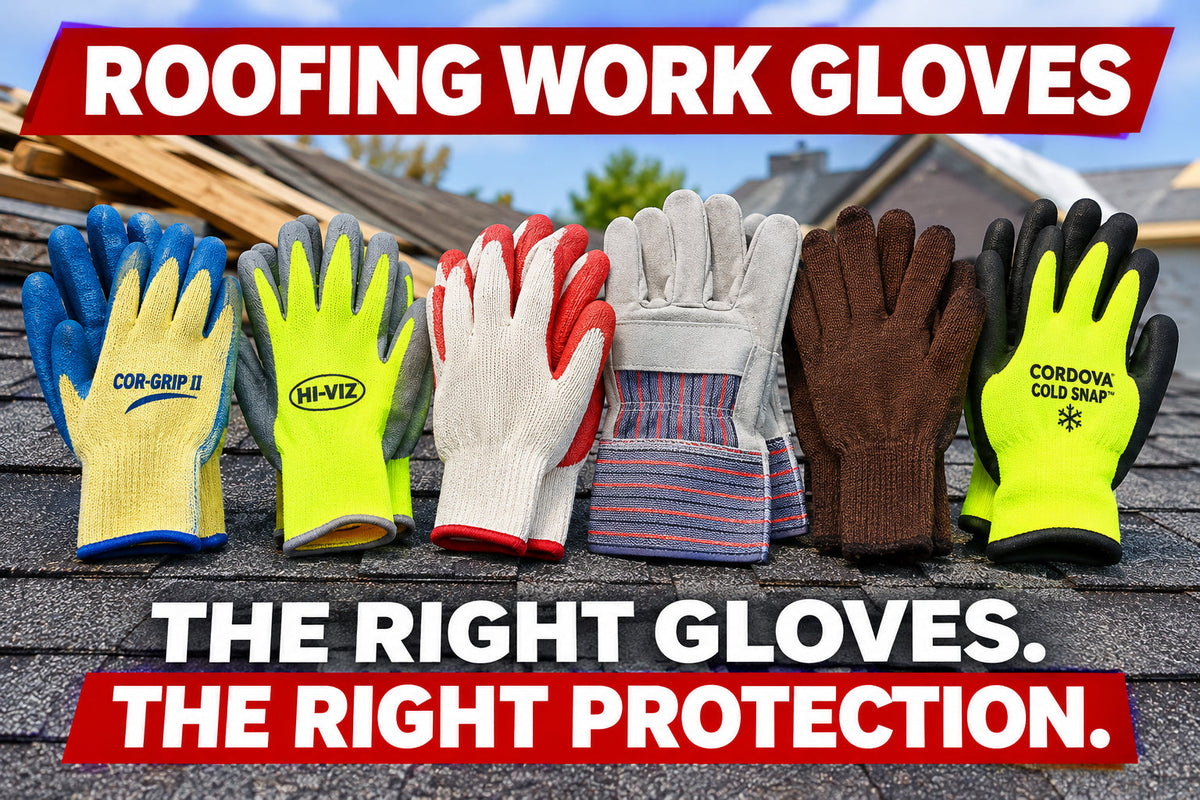
A good option to consider is the Cor-Grip II Premium Blue Crinkle Latex Palm Gloves. Their crinkle latex palm provides grip and abrasion resistance, while the seamless knit shell offers flexibility.
You can also check out the Hi-Viz Lightweight Latex Palm Coated String Knit Gloves, which feature a textured latex coating and a lightweight polyester liner designed for comfort and dexterity.
3. Handling Fasteners? Don't Sacrifice Dexterity
Roofing nails, screws, staples, and other small fasteners require precision. Bulky gloves may make it harder to pick up, position, and handle these items.
For tasks involving smaller hardware, look for gloves that provide:
-
A snug, comfortable fit
-
Good fingertip sensitivity
-
Flexible materials
-
Enough grip to handle small components securely
The Hi-Viz Lightweight Latex Palm Coated String Knit Gloves are worth considering for tasks where flexibility and grip matter.
Another option is the Latex Red Palm Coated Knit Gloves. Their lightweight knit shell and latex-coated palm provide a combination of flexibility and grip for general handling tasks.
The goal is to protect your hands without making detailed work more difficult. Choose gloves suited to the task, and never sacrifice necessary control just to get more coverage.
4. Working with Rough Materials? Choose Abrasion Protection
Roofing jobs often involve more than shingles and metal. Underlayment, lumber, insulation, concrete surfaces, and other rough materials can cause irritation, scrapes, and abrasions.
For these tasks, durable gloves with reinforced palms and abrasion-resistant construction can make a difference.
Consider the Machine Knit Gloves with Black Crinkle Latex Coating. Their textured latex coating is designed to improve grip and abrasion resistance while the knit shell provides a flexible fit.
For general labor and lighter-duty handling, Brown Jersey Knitted Gloves offer a breathable polyester/cotton construction and flexible fit.
Choose the glove based on the material you're handling and the level of protection the task requires.
5. Working in Cold Weather? Keep Your Hands Warm
Cold weather can make roofing work more challenging. Stiff fingers and uncomfortable hands can make it harder to grip tools and handle materials.
When temperatures drop, consider gloves designed specifically for cold conditions.
The Cordova Cold Snap Latex/Foam Thermal Gloves combine a thermal knit shell with a foam latex palm for warmth, grip, and flexibility. They're designed for cold-weather work and include cut-resistant features.
Always check the product details and fit before use, especially if you need to perform tasks requiring precise finger movement.
6. What Makes a Good Roofing Work Glove?
Before buying your next pair, pay attention to a few important features.
Grip: A textured palm or grip coating can help you maintain control when handling tools and materials.
Cut resistance: Useful when working around sharp metal edges and other cutting hazards. Check the glove's rated protection rather than relying on appearance alone.
Abrasion resistance: Important for repetitive contact with rough roofing materials and jobsite surfaces.
Dexterity: Gloves should allow you to perform tasks that require finger movement and precision.
Fit and comfort: A glove that fits properly is easier to work in throughout the day. Avoid gloves that are excessively loose, restrictive, or uncomfortable.
Durability: Look for quality construction, reinforced areas, and materials suited to the demands of your work.
Remember, the most expensive glove isn't automatically the best choice. The right glove is the one that provides appropriate protection for the task while allowing you to work safely and comfortably.
7. When Should You Replace Your Work Gloves?
Even quality work gloves wear down over time. Regularly inspect them before starting a job and replace them when you notice:
-
Holes, tears, or worn-through areas
-
Damaged seams or loose stitching
-
Cracked or peeling grip coatings
-
Reduced grip or excessive material wear
-
Damage that compromises the glove's protective features
Don't wait until a glove completely falls apart. Damaged gloves may no longer provide the protection they were designed to offer.
Also, remember that gloves are only one part of jobsite safety. Choose the appropriate protection for each hazard, and follow the manufacturer's instructions for use and care.
8. Build a Glove Selection That Matches Your Work
Roofers don't perform just one task throughout the day. You might handle metal in the morning, move shingle bundles before lunch, and spend the afternoon working with fasteners and tools.
That's why keeping different types of work gloves available can be a smart addition to your jobsite setup.
Instead of relying on one pair for everything, consider having gloves suited to:
-
General material handling: Knit gloves for everyday tasks
-
Grip-focused work: Latex-coated gloves for handling tools and materials
-
Heavy-duty handling: Leather palm gloves for rugged jobs
-
Cold-weather work: Thermal gloves for low-temperature conditions
Having the right pair ready helps you match your hand protection to the work ahead.
Don't Overlook the Importance of Hand Protection
Your hands help you handle materials, operate tools, secure fasteners, and complete every stage of a roofing project. Protecting them shouldn't be an afterthought.
Take a moment to assess the materials you're working with, identify the hazards, and choose gloves designed for those conditions. Inspect them regularly, replace damaged pairs, and make hand protection part of your daily jobsite routine.
The right gear helps you work with confidence. Start with protecting the hands that do the work.
Find the Right Work Gloves at RooferOutlet
Whether you need better grip, durable leather palms, lightweight knit gloves, or thermal protection for colder jobsites, RooferOutlet has several options to explore.
Don't leave hand protection until the last minute. Find the right pair for your next job.
Shop RooferOutlet for the tools, supplies, and jobsite essentials that help keep your projects moving.


