
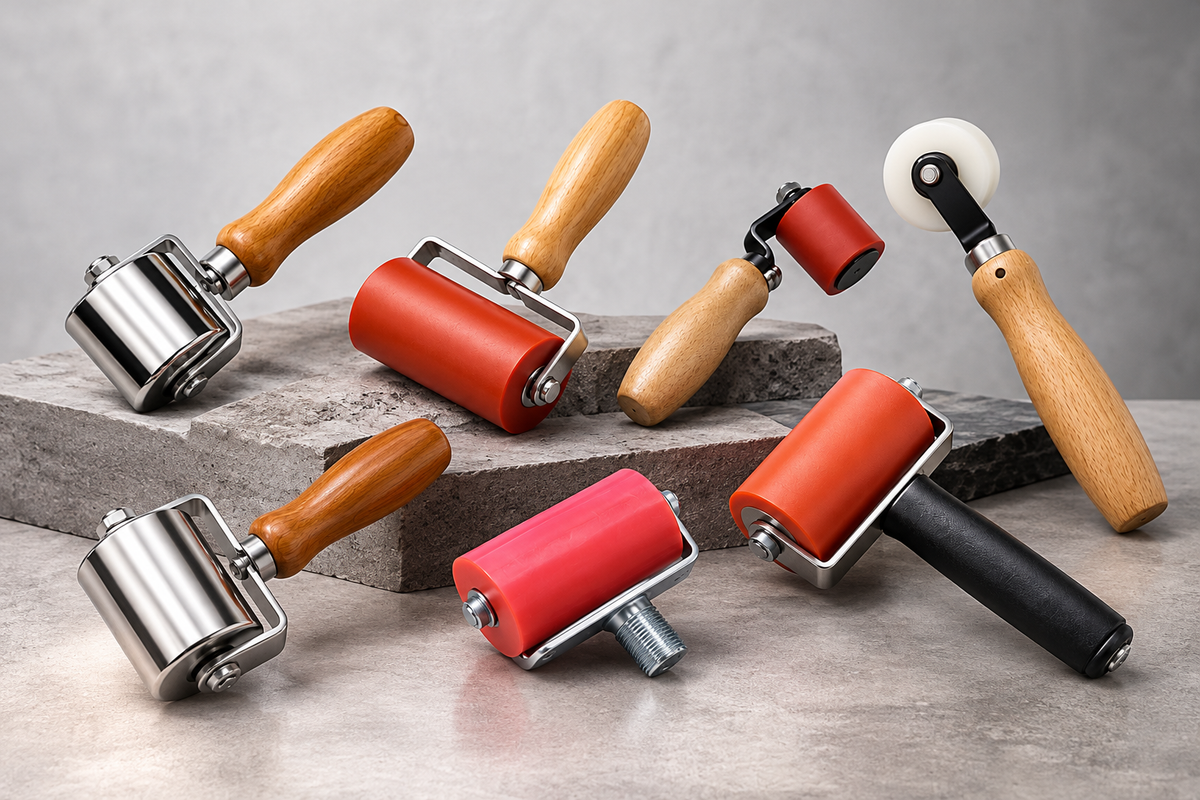
When you're working commercial roofing jobs, tool selection comes down to the details: the material you're working with, the seam configuration, the working space, and the installation requirements.
Steel, silicone, and specialty-profile seam rollers each have different characteristics. Choosing the right configuration for the application helps your crew work efficiently while following the roofing system's installation requirements.
Whether you're handling membrane details, pressing compatible flashing materials, or preparing your inspection kit, RooferOutlet offers seam rollers and seam probes in configurations suited to different roofing and finishing tasks.
Looking for a seam roller for your next job? Browse RooferOutlet's Seamers & Rollers collection to compare tools for your next project.
Steel vs. Silicone Seam Rollers
The choice between steel and silicone comes down to the intended application, surface compatibility, and the manufacturer's requirements.
Steel Seam Rollers
Steel seam rollers provide a rigid rolling surface for applications where that construction is appropriate. When comparing options, consider the roller dimensions, edge profile, and handle configuration.
Explore these steel seam roller options:
-
Steel Seam Roller — 2" × 2" Radius Edge — a compact roller configuration with a radius edge.
-
Steel Seam Roller — 2" × 4" Double Forked — a double-forked design for contractors comparing alternative roller configurations.
-
Steel Seam Roller — 2" × 4" — another steel roller option to compare for suitable applications.
Compare the dimensions and intended uses before ordering, and confirm that the selected tool is appropriate for the material and task.
Silicone Seam Rollers
Silicone seam rollers provide a different contact surface for compatible applications involving flashing materials, tapes, and other roofing details. Compare the roller width and handle style against your crew's requirements.
RooferOutlet offers several configurations:
-
Silicone Seam Roller — 1" × 2" with Wood Handle — a compact option for suitable detail work.
-
Silicone Seam Roller — 2" × 4" with Wood Handle — a wider roller for compatible applications.
-
Silicone Seam Roller — 2" × 4" with Threaded Handle — a threaded configuration to consider when selecting a compatible handle setup.
-
Heavy-Duty Silicone Seam Roller — 2" × 4" Threaded — another threaded option for contractors comparing roller designs.
The right choice isn't determined by the membrane name alone. Confirm compatibility with the specific material and installation procedure before using either roller.
Choosing the Right Roller Profile and Width
Roller dimensions and geometry matter when you're working around details, narrow sections, and varying surface configurations.
A compact roller can offer more maneuverability in confined areas, while a wider roller covers more surface in each pass when the application allows it. Specialty profiles offer a different contact shape and should be selected for the specific detail they're designed to handle.
Compare these options:
-
Compact silicone roller: 1" × 2" Silicone Seam Roller
-
Wider silicone roller: 2" × 4" Silicone Seam Roller with Wood Handle
-
Threaded silicone roller: 2" × 4" Threaded Silicone Seam Roller
-
Specialty profile: 2" Diameter V-Shaped Nylon Seam Roller
-
Alternative roller configuration: Steel Double-Forked Seam Roller
Before ordering, verify the tool dimensions, intended use, and compatibility with your application. A wider roller isn't automatically more productive if the work involves tight or intricate details.
TPO, PVC, and EPDM: Match the Tool to the Installation
Different membrane systems have different seam-forming procedures, and the roller should be selected accordingly.
TPO and PVC Roofing
TPO and PVC membrane seams are generally heat-welded. Use the specified welding equipment and follow the membrane manufacturer's requirements for temperature, speed, pressure, and seam testing.
Hand rollers may be appropriate for certain compatible flashing and accessory details, but they do not replace the prescribed welding process.
EPDM Roofing
Depending on the system, EPDM seam and flashing work may involve approved primers, tapes, adhesives, and accessories. Where rolling pressure is specified, use a compatible roller and follow the manufacturer's application procedure.
For all three systems, prioritize material compatibility and the approved installation method over assumptions based solely on roller material.
What Is a V-Shaped Seam Roller Used For?
A V-shaped seam roller has a shaped profile intended for particular seam-finishing and pressing applications. Its geometry differs from a conventional flat roller, making it worth considering when the tool's profile matches the working detail.
RooferOutlet offers the V-Shaped Nylon Seam Roller — 2" Diameter.
Its nylon construction and V-shaped profile distinguish it from the flat steel and silicone rollers in the collection.
Before using a V-shaped roller on a roofing membrane, confirm that its shape and material are appropriate for the intended detail. Do not use it as a substitute for membrane-specific seam-welding equipment or approved installation procedures.
Why Keep a Seam Probe in Your Inspection Kit?
Installation and inspection are separate steps. A seam probe helps check accessible seam edges and details for potential openings, but it doesn't replace the inspection and testing procedures specified by the roofing system manufacturer.
RooferOutlet offers the 10" Roofing Seam Probe with Threaded Plastic Handle.
The probe features a 10-inch steel shaft and a plastic handle with a threaded design for compatible extension-handle setups.
Inspection best practices:
-
Inspect seams at the stages required by the roofing system specifications.
-
Check accessible edges and details using the manufacturer's recommended method.
-
Avoid forcing the probe into a seam or damaging the membrane.
-
Investigate suspicious areas using the required corrective and testing procedures.
-
Document and address defects before considering the work complete.
A probe is an inspection aid, not a guarantee that a seam is watertight. Use the correct testing procedures for the membrane system and project requirements.
Maintaining Your Seam Rollers and Probes
Roofing tools are exposed to dirt, adhesive residue, weather, and frequent handling. Regular maintenance helps keep them ready for the next job.
-
Remove residue using cleaning products approved for the roller material and associated roofing products.
-
Avoid solvents or chemicals that may damage silicone, nylon, handles, or other components.
-
Inspect roller surfaces for damage, uneven wear, or contamination.
-
Check handles and threaded connections before use.
-
Store tools in a clean, dry location according to the manufacturer's instructions.
-
Keep inspection tools protected so their working ends remain in suitable condition.
Pay particular attention to the roller surface. A damaged or contaminated tool may not perform as intended, and cleaning procedures should always be compatible with the material.
Get the Right Seam Tools for Your Next Job
Choosing the right roofing seam roller starts with understanding the application. Steel, silicone, V-shaped, and double-forked rollers each offer different designs, while a seam probe serves a separate inspection purpose.
For contractors working with TPO, PVC, and EPDM systems, the priority is selecting tools that match the material, installation detail, and manufacturer's requirements.
Compare the available configurations before your next project:
Equip your crew with the seam rollers and inspection tools suited to your next roofing project. Shop RooferOutlet's full Seamers & Rollers collection.
Frequently Asked Questions
What is the best roofing seam roller?
The best roofing seam roller depends on the material, the detail being worked on, and the manufacturer's installation requirements. Compare steel, silicone, and specialty-profile rollers based on their specifications and intended use.
Can you use a silicone seam roller on TPO roofing?
A silicone roller may be suitable for certain compatible TPO accessories, flashing materials, or adhesive-backed details. However, TPO membrane seams are generally heat-welded, and a hand roller does not replace the required welding equipment or procedures. Always follow the membrane manufacturer's instructions.
Is a steel or silicone seam roller better?
Neither is universally better. Steel and silicone have different surface characteristics and are intended for different applications. Consider material compatibility, the working detail, roller dimensions, and the manufacturer's recommendations.
What is a V-shaped seam roller used for?
A V-shaped seam roller has a shaped profile intended for particular seam-finishing and pressing applications. Check the product specifications and confirm that its profile is suitable for the material and task.
What does a roofing seam probe do?
A roofing seam probe helps inspect accessible seam edges and details for potential openings or defects. It is an inspection aid and does not replace required seam testing or quality-control procedures.
Where can I buy roofing seam rollers?
You can compare steel, silicone, V-shaped, and other seam roller designs in RooferOutlet's Seamers & Rollers collection. The collection also includes related seamers and metalworking tools.


