
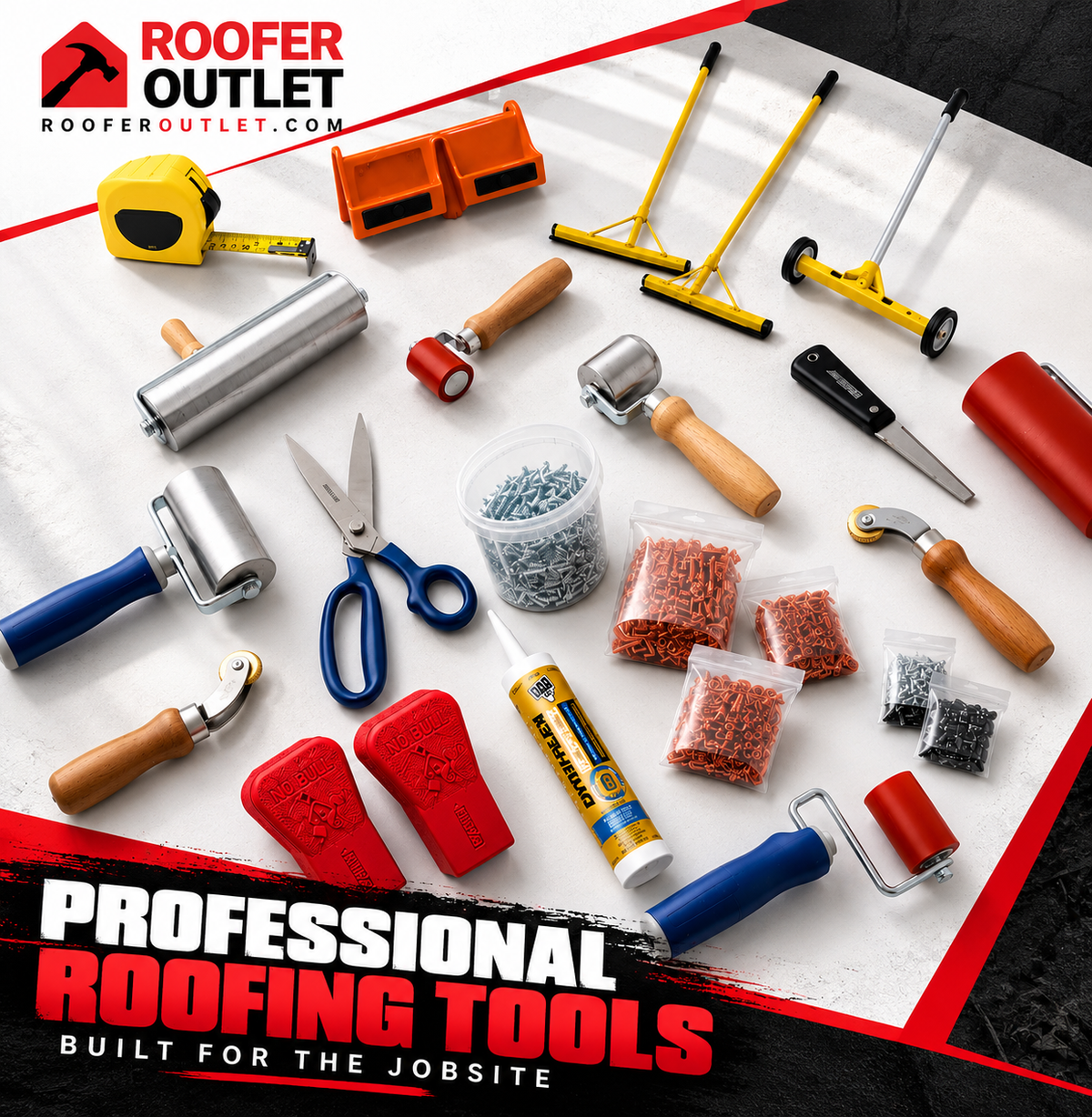
Every roofing job requires the right tools. Whether you're installing shingles, working with metal roofing, handling flashing, or completing repairs, having the proper equipment on hand can make a significant difference in your workflow, accuracy, and jobsite efficiency.
For professional roofing contractors, a well-organized tool bag is more than a convenience. It helps reduce unnecessary trips to the truck, keeps essential supplies within reach, and makes it easier to stay prepared for unexpected tasks.
But with so many roofing tools available, which ones should every roofer have?
In this guide, we'll cover the essential roofing tools every contractor should consider keeping in their tool bag, from everyday hand tools and cutting equipment to fasteners, safety accessories, and jobsite cleanup essentials.
1. Roofing Hammers and Pry Bars
A dependable hammer is one of the most frequently used tools on many roofing jobs. From removing old roofing materials to securing components and performing general installation work, a quality hammer is an important part of a roofer's toolkit.
Depending on the type of roofing work, contractors may need different hammer styles for demolition, shingle installation, or other specialized tasks.
Pry bars are equally useful, particularly during roof tear-offs, flashing removal, and repairs. Having the right pry bar can help with lifting, separating, and removing materials during preparation and installation.
What to look for:
-
Durable construction designed for regular jobsite use
-
A comfortable, secure grip
-
A suitable hammer or pry bar style for the roofing application
-
A weight and size that are comfortable for the user
Explore RooferOutlet's hand tools to find practical tools for everyday roofing and installation tasks.
2. Utility Knives and Replacement Blades
A utility knife is a must-have for roofers who regularly cut underlayment, roofing materials, packaging, and other jobsite supplies.
A reliable knife with a comfortable grip and a secure blade mechanism makes repetitive cutting tasks easier to manage. Keeping replacement blades on hand is just as important, since worn or damaged blades can affect cutting quality and control.
Why every roofer needs them:
-
Cutting roofing underlayment and compatible materials
-
Trimming materials to the required dimensions
-
Opening packaging and supply bundles
-
Performing general cutting tasks around the jobsite
Always use a blade appropriate for the material, follow the manufacturer's instructions, and replace damaged or dull blades promptly.
Shop utility knives, replacement blades, and cutting tools to keep your tool kit ready for the next project.
3. Roofing Snips for Metal Cutting
For contractors who work with metal roofing, flashing, gutters, or sheet metal, snips are essential tools to have available.
Aviation snips are commonly available in straight-cut, left-cut, and right-cut styles. The correct choice depends on the direction, shape, and accessibility of the cut.
Using the appropriate snips can help contractors achieve cleaner cuts and better control when working with compatible sheet metal.
Consider keeping these in your tool kit:
-
Straight-cut aviation snips for suitable straight cuts
-
Left-cut snips for curved and directional cuts
-
Right-cut snips for curved and directional cuts
-
Combination snips for versatile cutting applications
Choose snips based on the metal's thickness and the tool manufacturer's specifications. Avoid forcing snips through materials beyond their rated capacity.
Explore RooferOutlet's snips, blades, and bits for cutting tools suited to different roofing and metalworking tasks.
4. Roofing Screws and Fasteners
Fasteners are a critical part of many roofing installations. Choosing the correct screw or nail for the material and roofing system helps support a secure installation and a professional finish.
Roofing contractors may use different types of fasteners depending on whether they are installing metal panels, attaching trim, securing compatible accessories, or completing gutter work.
Some common fasteners include:
-
Self-piercing zip screws for suitable light metal and gutter applications
-
Self-tapping screws for compatible metal-to-substrate installations
-
Trim nails for appropriate siding, soffit, fascia, and trim applications
-
Other system-specific fasteners specified by the roofing manufacturer
The correct fastener depends on the substrate, material thickness, corrosion exposure, required holding performance, and installation specifications. Always follow the roofing system manufacturer's requirements.
For metal and gutter applications, browse self-piercing zip screws and trim nails or explore the wider fastener collection.
5. Measuring and Marking Tools
Accurate measurements are essential for proper material placement, layout, and cutting. Even experienced roofers benefit from having reliable measuring and marking tools readily accessible.
A tape measure is useful for measuring panel lengths, spacing, dimensions, and material requirements. Chalk lines and marking tools can help establish straight reference lines and consistent layouts.
Useful measuring and marking essentials:
-
Tape measures
-
Chalk lines
-
Chalk and marking crayons
-
Suitable straightedges and layout tools
Keep measuring tools clean and protected from damage, and check measurements before cutting or fastening materials.
Browse RooferOutlet's roofing and jobsite supplies to find tools and accessories for project preparation.
6. Drill Bits and Magnetic Nut Setters
For roofers working with compatible screws and metal roofing systems, drill bits and magnetic nut setters can help make fastening tasks more convenient.
Magnetic nut setters are particularly useful when working with compatible hex-head screws. They help hold fasteners in place during positioning and driving, depending on the application and tool design.
Having the appropriate accessories available can reduce interruptions caused by misplaced or incompatible bits.
What to keep on hand:
-
Magnetic nut setters in the correct drive size
-
Compatible drill and driver bits
-
Spare bits for frequent-use applications
-
A suitable impact driver or drill
Make sure your bits and nut setters match the fastener head and are suitable for the tool being used.
Find magnetic nut setters and compatible accessories and drill bits at RooferOutlet.
7. Roofing Safety Equipment and Ladder Accessories
Working at height requires proper planning, suitable equipment, and consistent attention to safety. Roofing contractors should use the protective equipment and fall-protection systems required for their particular worksite and applicable safety regulations.
Depending on the task, a roofer's safety equipment may include:
-
Appropriate fall-arrest or fall-restraint equipment
-
Hard hats and protective eyewear
-
Roofing gloves
-
Slip-resistant footwear
-
Suitable ladder accessories
Ladder stabilizers and accessories can help with appropriate ladder positioning and protection of contact surfaces, but they do not replace correct ladder setup, inspection, or fall-protection measures.
Before each job, inspect equipment, follow manufacturer instructions, and ensure that the crew understands the required safety procedures.
Explore RooferOutlet's must-have roofing supplies for selected jobsite accessories and essentials.
8. Magnetic Sweepers for Jobsite Cleanup
A roofing job isn't finished when the last fastener is installed. Proper cleanup is an important part of maintaining an organized site and helping reduce the risk of injuries and damage caused by loose metal debris.
Nails, screws, staples, and other metal fragments can be left behind during roofing, siding, and construction work. A magnetic sweeper can help collect compatible metal debris from ground-level areas such as driveways, walkways, and work zones.
Why contractors use magnetic sweepers:
-
Collecting loose nails, screws, and staples
-
Helping clean up after roof tear-offs
-
Maintaining tidier driveways and surrounding work areas
-
Reducing the need to pick up metal debris by hand
Choose a sweeper suited to the size and layout of the cleanup area. Remember that magnetic sweepers only collect compatible ferrous materials, so a visual inspection and other cleanup methods are still necessary.
Check out RooferOutlet's heavy-duty magnetic sweepers, available in multiple styles and sizes for different cleanup requirements.
9. Organizing Your Roofing Tool Bag
Having the right roofing tools is only part of the equation. Keeping them organized and accessible can make preparation and everyday work more efficient.
A well-organized tool bag or truck setup helps crews find what they need, identify missing items, and protect equipment between jobs.
Tips for organizing your roofing tools:
-
Group cutting tools together and store blades securely.
-
Keep frequently used hand tools in accessible compartments.
-
Store fasteners separately by type and size.
-
Keep drill bits and nut setters organized to prevent loss.
-
Store safety equipment according to manufacturer recommendations.
-
Inspect tools regularly for damage, wear, or missing parts.
At the end of each workday, take a few minutes to return tools to their designated storage locations, replenish frequently used supplies, and prepare for the next project.
You can browse RooferOutlet's complete product selection to find tools, fasteners, and accessories to support your crew's setup.
10. Build a Roofing Tool Kit That Works for Your Crew
Not every roofing job requires the same equipment. A residential shingle crew may have different needs from a metal roofing installer, a gutter contractor, or a commercial roofing team.
The key is to build a toolkit around the type of work you perform most often, while keeping the essential tools and safety equipment available for every job.
Before purchasing new equipment, review your current inventory, identify frequently used tools, and replace items that are worn or no longer suitable for the task.
Having the right tools on hand can help your crew stay organized, prepare for different jobsite requirements, and avoid unnecessary delays.
At RooferOutlet, you'll find a wide selection of pro-grade roofing tools, fasteners, and jobsite essentials at outlet prices.
Get Ready for Your Next Roofing Job
From everyday hand tools and cutting accessories to fasteners and jobsite cleanup supplies, having the right equipment makes preparation easier.
Whether you're restocking your truck, replacing worn tools, or putting together a toolkit for a new crew, start with the essentials that match your roofing work.
Explore RooferOutlet's full range of roofing tools and supplies and get ready for your next job.
Frequently Asked Questions
What are the most essential tools for a roofer?
Common essentials include a roofing hammer, pry bar, utility knife, replacement blades, measuring tools, appropriate snips, fasteners, a compatible drill or driver, and the required safety equipment. The exact list depends on the roofing system and work being performed.
What tools do roofers use for metal roofing?
Metal roofing contractors commonly use aviation snips, measuring and marking tools, compatible drill bits, magnetic nut setters, and system-specific screws and fasteners. Specialized seamers and rollers may also be required for certain metal roofing applications.
Why should roofers carry extra blades and fasteners?
Having suitable replacement blades and the correct fasteners available can help avoid unnecessary interruptions when supplies wear out or run low. Contractors should keep commonly used sizes and types organized according to their project requirements.
How can roofers keep their tools organized?
Use designated storage compartments, separate fasteners by size and type, secure cutting tools safely, and inspect equipment regularly. A consistent end-of-day inventory check can help identify missing or damaged tools before the next job.
Where can contractors buy roofing tools and supplies?
Contractors can browse RooferOutlet, which offers a selection of roofing tools, fasteners, and jobsite supplies for professional contractors and other customers.


